


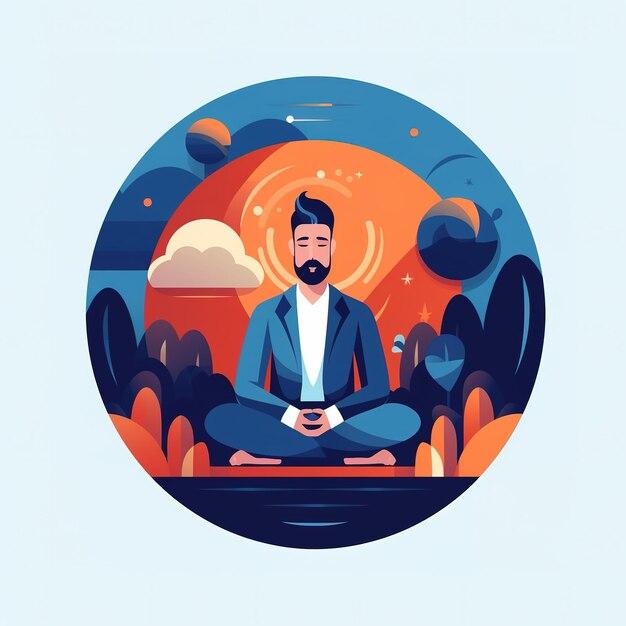
Ravi, a busy IT professional, sat quietly for five minutes, closed his eyes, and attempted to meditate. Within seconds, thoughts about deadlines, family responsibilities, and unfinished tasks flooded his mind.
"I can't meditate," he concluded. "I
tried meditation once. It didn't work. He sighed
If Ravi's experience sounds familiar, you're not
alone.
Many people believe meditation is difficult,
mysterious, or meant only for certain kinds of people. The truth is that
meditation is one of the simplest tools available to improve focus, emotional
balance, and overall well-being.
Here are few myths to crack
Myth #1: Meditation Means Stopping All
Thoughts
This is perhaps the biggest misconception. The human
mind is designed to think. Meditation is not about creating a blank mind. It is
about becoming aware of your thoughts without getting carried away by them.
Think of it like sitting on the bank of a river and
watching the water flow. The thoughts are the river. You are the observer.
Reality: Successful meditation is not the absence of
thoughts but the presence of awareness.
Myth #2: Only Spiritual People Meditate
Meditation has roots in spiritual traditions, but
today it is practiced by people from all walks of life. Students use it to
improve concentration. Athletes use it to enhance performance. Leaders use it
to make better decisions. Parents use it to manage stress.
You don't need special abilities to meditate.
Reality: Meditation is a human skill, not a
religious requirement.
Myth #3: I Need at Least 30 Minutes
Every Day
Many people avoid meditation because they believe
they don't have enough time.
The truth is that even three to five minutes of
mindful breathing can create a noticeable shift in your mental state. A few
minutes practiced consistently often creates more benefit than a long session
practiced occasionally.
Reality: Consistency matters more than duration.
Myth #4: Meditation Is Escaping Reality
Some people worry that meditation makes people
passive or disconnected from real-life responsibilities. In fact, meditation
helps us engage with life more consciously. When we become aware of our
thoughts and emotions, we respond instead of reacting.
Reality: Meditation helps us face reality with
greater clarity.
Myth #5: Meditation Is Only for Stress
Relief
While meditation can reduce stress, its benefits go
much deeper.
A monk was once asked, "What do you gain from
meditation?"
He smiled and replied, "Nothing, but let me
tell you what I have lost: anger, anxiety, fear, insecurity, and the habit of
living everywhere except at the present moment."
Regular practice can improve:
Focus and concentration
Emotional regulation
Self-awareness
Patience
Quality of relationships
Decision-making
Reality: Meditation is not just a relaxation
technique; it is a life skill.
Myth #6: I'm Not Good at Meditation
Many beginners judge themselves because their minds
wander. The wandering mind is not the problem. Every time you notice your
attention has drifted and gently brought it back, you are practicing
meditation.
Reality: There is no perfect meditator. There is
only practice.
A Simple Way to Begin
Right now, pause for one minute.
Take a slow breath in.
Take a slow breath out.
Notice the sensation of breathing.
If thoughts arise, simply notice them and return to
your breath.
That's it! You have just meditated.